

Get five quotes for the same bathroom installation in South London and you’ll see prices £4,000 apart. The cheapest quote isn’t always cutting corners — and the most expensive isn’t always premium quality. Here’s how to read a bathroom installation quote in 2026, what each line item should cost, and how to know which quote is honest.
A new bathroom installation in London in 2026 costs £4,500–£7,500 for a like-for-like suite swap, £8,000–£13,000 for a full renovation with fixture relocation, and £10,000–£18,000 for a wet room or specialist installation. Labour represents 40–55% of the total; fittings 25–35%; tiles, glass and surfaces 15–25%. The single biggest variable isn’t the size of the bathroom — it’s whether the WC, basin and shower stay in their current positions.
Key takeaways
- A like-for-like installation costs roughly 30% less than one with relocated fixtures.
- Labour rates in South London average £280–£380 per day for skilled plumbing fitters in 2026 [VERIFY].
- Wall and floor tiling typically runs £55–£90 per m² installed, including materials.
- A complete renovation including making good takes 8–15 working days in a single bathroom.
- Hidden costs that catch people out: waste removal (£200–£400), making good (£300–£800), commissioning checks (£150–£250).
Why bathroom installation quotes vary so wildly
The £4,000 range homeowners typically see between quotes isn’t random. Three drivers explain most of it.
- Whether labour is fixed-price or day-rate. Day-rate work in bathrooms tends to extend — every snag becomes a billable hour. Fixed-price aligns incentives to finish on schedule.
- Whether fittings are sourced by you or the contractor. Contractor sourcing carries a 15–30% markup; client sourcing saves that but transfers risk for delivery delays and defects.
- Whether “making good” is included or charged separately. “Making good” covers painting, mastic, snagging, and final commissioning. A cheap quote that excludes making good can land 25% higher by the end of the project.
Two contractors quoting the same scope can produce £6,500 and £10,200 quotes legitimately — the difference is what’s bundled vs unbundled. Always ask: “What is not included that I will need to pay separately?”
The three installation tiers in 2026 London
Tier 1: Like-for-like swap (£4,500–£7,500)
- Replace existing fixtures in same positions
- Re-tile floor and walls
- New basin, WC, bath/shower in same locations
- Mid-range fittings (Bristan, Roper Rhodes, similar)
- 5–8 working days
Tier 2: Mid-tier renovation (£8,000–£13,000)
- Some fixture relocation
- Higher-spec fittings (Hansgrohe, Grohe, similar)
- Possibly underfloor heating
- Wall-hung WC, glass shower screen
- 8–12 working days
Tier 3: Premium / wet room (£12,000–£20,000+)
- Wet room with full tanking
- Bespoke joinery / vanity
- Premium tiles (large-format, natural stone, or microcement)
- Statement fittings
- 12–18 working days
The tier doesn’t say anything about quality — a well-executed Tier 1 renovation will outlast a cheaply-built Tier 3 by years. The tier reflects scope and finish, not workmanship.
Line-item breakdown of an honest mid-tier quote
What you should see in a properly itemised £9,750–£12,950 quote for a mid-tier renovation:
| Item | % of total | Cost (£) |
|---|---|---|
| Strip-out + waste removal | 4–7% | 450–750 |
| First-fix plumbing + electrics | 12–18% | 1,200–1,800 |
| Tanking + waterproofing | 6–10% | 600–1,000 |
| Tiling (materials + labour) | 18–25% | 1,800–2,500 |
| Suite fittings (basin, WC, bath/shower) | 18–25% | 1,800–2,800 |
| Brassware (taps, shower, valves) | 8–12% | 800–1,200 |
| Glass + screens | 4–7% | 400–700 |
| Lighting + extractor | 3–6% | 300–600 |
| Making good (paint, mastic, snagging) | 4–6% | 400–600 |
| Total | 100% | 9,750–12,950 |
Adjust ±25% for premium or budget specification. If a quote you receive doesn’t break down to roughly these proportions, ask why — disproportions usually indicate either missing work or unrealistic margins on a particular line.
What relocating fixtures actually costs
Relocation is the single largest cost variable inside your control as a client. Each move adds:
- Moving the WC: £800–£1,500 (depends on distance to existing soil stack)
- Moving the basin: £400–£800 (cold and hot water plus waste)
- Moving the shower: £600–£1,200 (drainage gradient consideration)
- Moving full layout (three or more fixtures): £2,500–£4,500
In flats, soil pipe relocation may require freeholder consent and can take 4–8 weeks for the freeholder process before work can start. In conservation areas, external waste pipe routing changes may be restricted. Both of these dramatically expand the project beyond what the quote price suggests.
Where homeowners overspend in 2026
Patterns we see in retrospective project reviews — where clients spent significant money on items that delivered little day-to-day value:
- Premium brassware. A £400 mixer and a £1,800 mixer perform almost identically for the user. The £1,400 difference rarely shows up at sale.
- Designer tile premiums. A 200% premium on tile typically delivers a 20% improvement in perceived quality. Worth it sometimes; rarely worth it on a small bathroom.
- Smart electronic fittings. Electronic shower controls have a reliability and lifespan problem — they break, and replacement is expensive.
- Statement vessel basins. Visually striking, daily cleaning nightmare, splash issues — a survey-month favourite that becomes a daily annoyance.
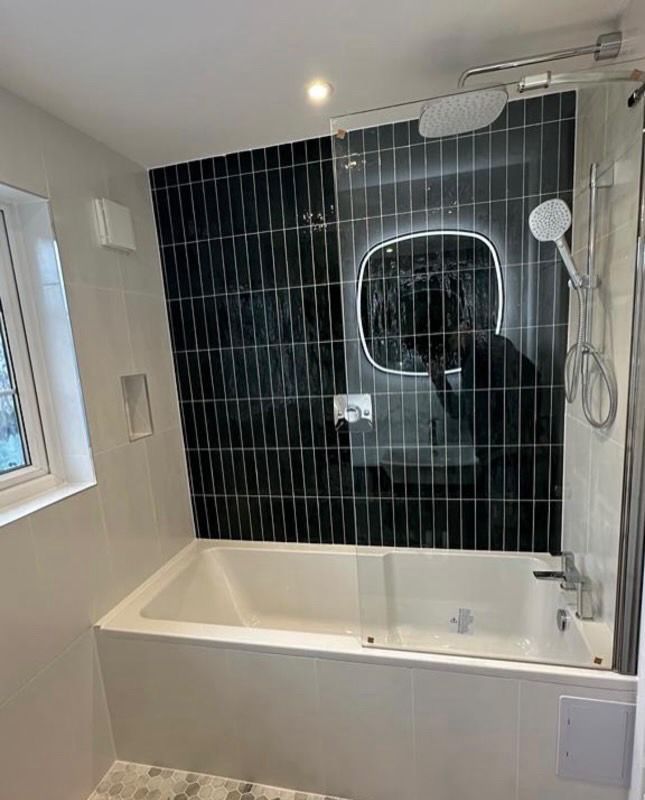
Where the same money is better spent:
- Proper waterproofing (tanking). Non-negotiable in wet rooms. Cheap on the way in; very expensive when it fails.
- Tile installation quality. Cheap tile laid well outlasts expensive tile laid badly.
- Adequate extractor fan. A £180 inline extractor with humidity sensor prevents £4,000 of mould remediation in three years.
- Lighting. Highest perceived-value-per-£ in the entire renovation.
Where contractors cut corners (and what it costs you later)
Specific failure modes we encounter when called in to assess problems from previous installations:
- Skipping tanking. Leak in 12–24 months. Damage often six figures by the time it’s discovered.
- Inadequate substrate prep before tiling. Cracked tiles within 2 years. Re-tiling cost: £1,800–£3,500.
- Cheap silicone. Black mould in 6 months. Cosmetic remediation only, but constant.
- Undersized extractor. Mould throughout the room within 18 months. Ceiling and grout remediation cost: £600–£1,800.
- No pressure-test on plumbing. Slow leak through the ceiling below. Found 6–18 months later. Insurance claim plus relationship damage with neighbour below.
Composite case: a homeowner in Tooting accepted a quote £4,200 lower than the next bid. The lower quote excluded tanking, used cheap silicone, and skipped the pressure test. Fourteen months in, a leak appeared in the flat below. Total remediation cost including damage to the flat below: £6,800. The cheaper quote cost £2,600 more by the end.
How to compare quotes without getting played
Five rules for reading bathroom installation quotes:
- Get 3 itemised quotes with the same scope. Refuse to compare a 1-page quote with a 6-page one — ask the brief contractor to expand or move on.
- Ask each contractor what’s NOT included. This question reveals more than any other. Honest contractors answer specifically. Vague answers signal vague quotes.
- Confirm payment schedule. No more than 25% upfront. Stage payments tied to milestones, not calendar dates.
- Check Gas Safe and NICEIC registration. These are non-negotiable for plumbing and electrics. Verify on the official registers, not just from the contractor’s website.
- Request three recent references in your postcode area. Talk to the references. Ask about snagging response and any issues that came up after handover.
The cheapest quote with “making good not included” is often the most expensive by the end. The cheapest quote with a 50% deposit is a red flag, not a deal.
What to budget if you want a full bathroom in 2026 South London
Pragmatic budget framework by property type:
| Bathroom type | Good-quality budget | Premium budget |
|---|---|---|
| Compact flat bathroom (2.5–4m²) | £6,500–£9,500 | £11,000–£14,000 |
| Family bathroom (4–7m²) | £8,500–£13,000 | £14,000–£20,000 |
| Master ensuite with wet room | £12,000–£18,000 | £18,000–£28,000 |
| Cloakroom / WC | £3,500–£5,500 | £5,500–£8,500 |
Add 10–15% contingency for unforeseen issues — drainage problems found at strip-out, joist damage, or unexpected pipework routes. Most renovations stay within budget; the ones that overrun do so because no contingency was held.
How to plan a bathroom renovation that delivers value
The pattern that consistently delivers good value in South London bathroom renovations:
- Survey the existing site before designing — work with the plumbing infrastructure you have.
- Decide on layout based on use, not Pinterest. Keep the bath if the property is family-target.
- Spend the budget on waterproofing, lighting, and tile quality. Fittings can be mid-range without daily-use regret.
- Take the fixed-price quote that includes making good, even if it looks higher upfront.
- Hold a 10–15% contingency outside the contract sum, in case the site surprises you.
Frequently asked questions
How long does a bathroom installation take in 2026 London?
A like-for-like installation (no fixture relocation) takes 5–8 working days. A renovation involving moving fixtures or installing a wet room takes 8–15 working days. Add 2–4 days if the soil pipe needs relocating or if structural work is involved. Allow buffer days for tile delivery delays — they are the most common cause of project overrun.
What’s included in a “full” bathroom installation cost?
A proper full installation quote should include strip-out and waste removal, first-fix plumbing and electrics, tanking where required, tile supply and installation, all suite fittings (or PC sum if client-supplied), brassware, glass screens, lighting, extractor, and making good (paint, silicone, snagging). Anything missing usually appears as a supplementary charge mid-project.
Can I save money by supplying my own fittings?
Yes, typically 10–20% on the suite portion of the cost. The catch: most contractors won’t warranty fittings they didn’t supply, and any defective items become your problem to return, refund and re-source — which can delay the project. If you go this route, buy everything at least 2 weeks before start date and check for damage on arrival.
How much should I pay upfront for a bathroom installation?
Industry-standard practice in 2026 London is 25% deposit on contract signing, 25% on first-fix completion, 25% on second-fix completion and 25% on snagging sign-off. Avoid contractors asking for 50% or more upfront. Avoid contractors asking for cash. A proper contract specifies staged payments tied to defined milestones.
Do I need planning permission for a bathroom renovation in London?
For a like-for-like renovation in your own home, no — it falls under permitted development. You may need building regulations approval for major plumbing changes, electrical work, or structural alterations. Leasehold flats often need freeholder consent for any significant work. Listed buildings or conservation areas have stricter rules. Check before starting.
Why are South London bathroom prices higher than the UK average?
Three reasons: labour rates run 15–20% above the UK average; access constraints in terraced housing and flats slow work down (parking permits, narrow stairs, shared communal spaces); and waste removal costs more in central postcodes. A renovation that costs £8,000 in Birmingham typically costs £9,500–£10,000 in South London for the same scope.